The Local Town
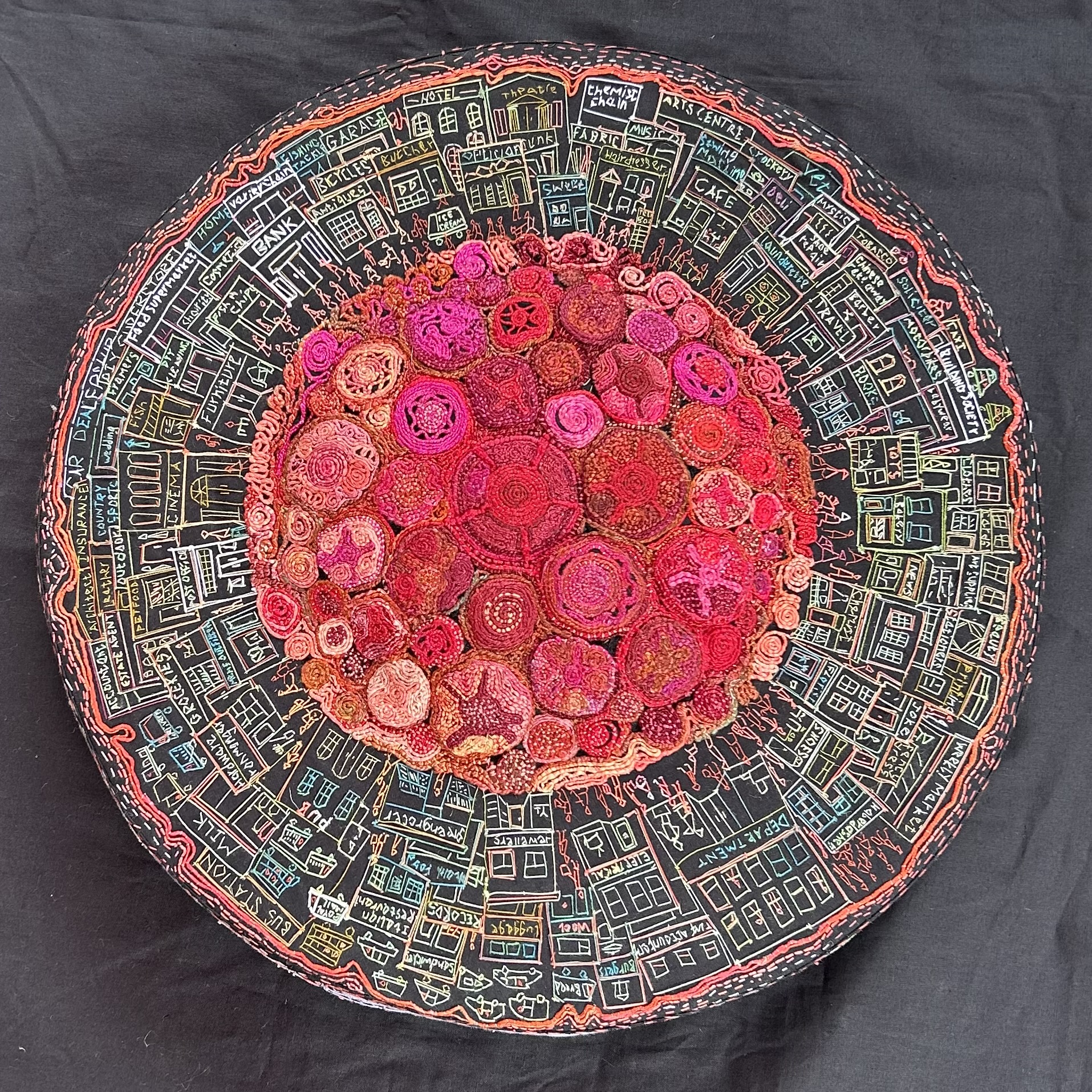
Like most small towns my local one has seen many changes, but none so rapid as in the last thirty to forty years. Gone are the multitude of small local shops in and surrounding the town centre, replaced by ever larger multi-national supermarkets and chain stores.
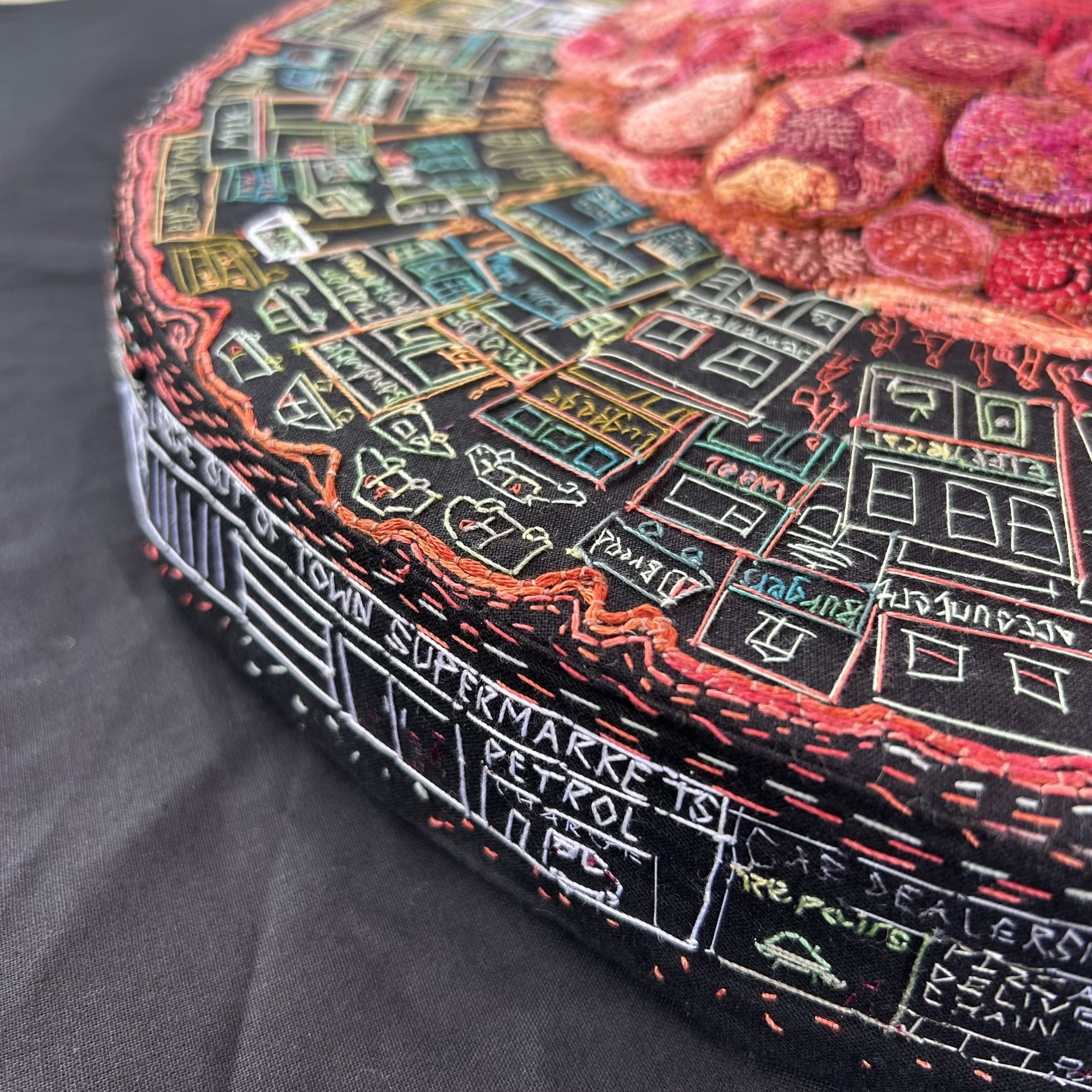
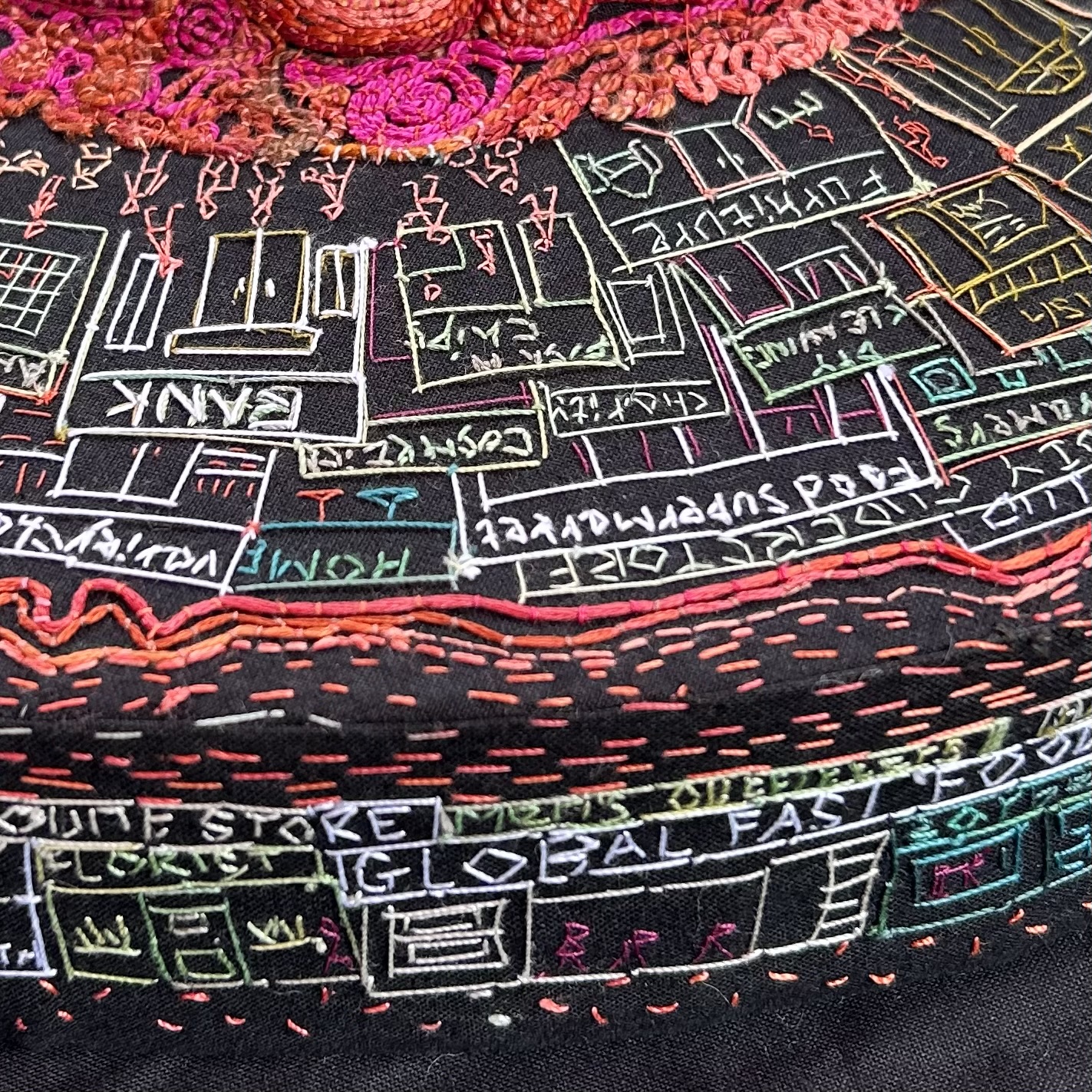
The hundreds of small daily social interactions of the 1960-1980’s town is depicted as rich stitching of pink, red and orange at the centre the town. It is surrounded by the shops I remember as a child and some as recently as the early 1990s.
Tipping over the edge the town contrasts with the past. There is no centre, the town has been hollowed out to be replaced first by small chains that subsequently closed, then by large out of town supermarkets, selling not only food, but everything from clothes to household goods. Local producers are squeezed to supply their food cheaper for a few very large multi-national retailers to pay dividends to shareholders with no connection to the people it takes from. The demise of the town community has been exacerbated further by online shopping, particularly large online stores, a chunk of every purchase making a few billionaires richer.
Attempts to remedy the loss of the casual, everyday organic community appear as community hubs. These are certainly welcome and do their best at reaching those that are vulnerable. However, even when run be volunteers there are premises to maintain and funds to find. Despite the best will in the world, it creates two sets of people, those that help and those that receive help. What happens to those for whatever reason do not wish to be part of a group? The relationship between shopkeeper/assistant and customer was equal, money exchanged for goods. For some the few words they spoke with a shop assistant or another customer may have been the only contact with a human in days. Most shops were sensitive to the needs of their regular customers in the same way the doorstep milkman once looked out for elderly customers on his rounds.